
No tree calls a meeting · What appears as many · A single seedling · Every fire gets fought · The system that supported them
No tree calls a meeting
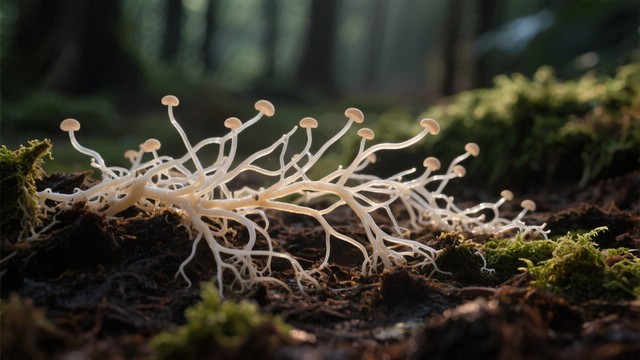
When drought hits a forest, no tree calls a meeting. Through underground networks of fungal threads woven between root systems, water moves from trees with deep reserves toward those struggling on shallow soils, chemical signals travel from a tree under attack to neighbors who begin raising their own defenses before a single insect arrives, resources flow toward the most vulnerable seedlings — automatically, without direction from any individual organism.
These underground pathways are simultaneously stable infrastructure and dynamic communication system; simultaneously the medium and the message, the connection and what flows through it. A living web where the network itself becomes the coherence.
What appears as many
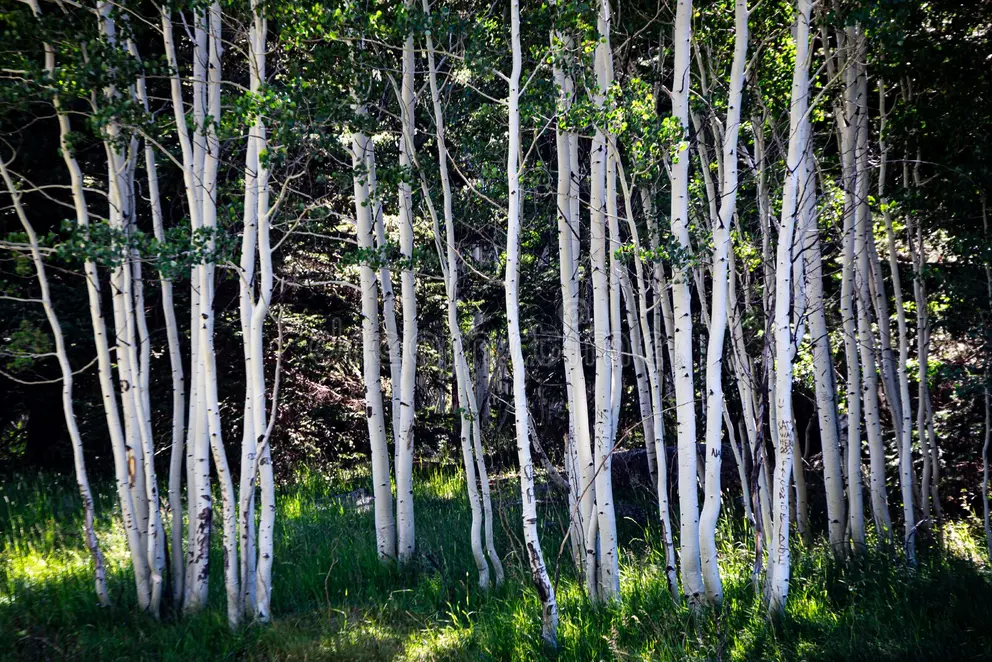
A stand of aspen trees looks like a forest. Hundreds of separate trunks, each growing, leafing, aging, falling on its own timeline. But beneath the ground, those trees share a single root system: genetically identical, physiologically continuous, sending up new stems as others complete their arc. What appears as many is one organism expressing itself across space and time.
A single seedling
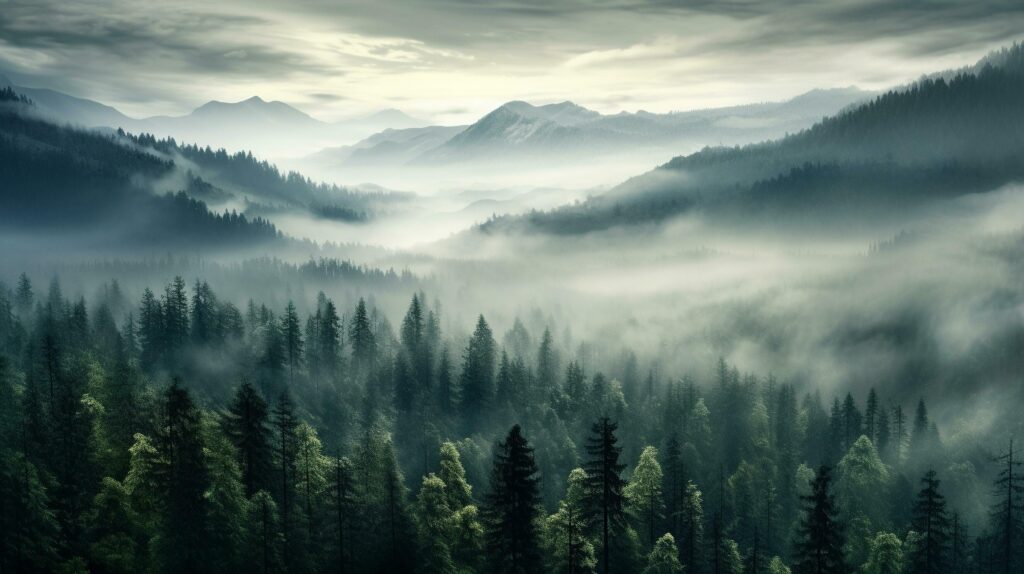
A single seedling struggles in drought. Its nearest neighbors, connected through shared fungal partners, redirect water toward it; a response at the scale of local roots and close relationships.
That local exchange doesn’t stay local. Across the forest stand, trees with no direct connection to the seedling begin adjusting their own water conservation, already reading conditions they haven’t yet directly encountered. Further still — across hillsides, across entire watersheds — distant stands are shifting their root systems and adjusting their storage based on signals that have traveled through networks spanning the landscape.
What looks like a small, local event is already happening at every scale the system touches.
Every fire gets fought
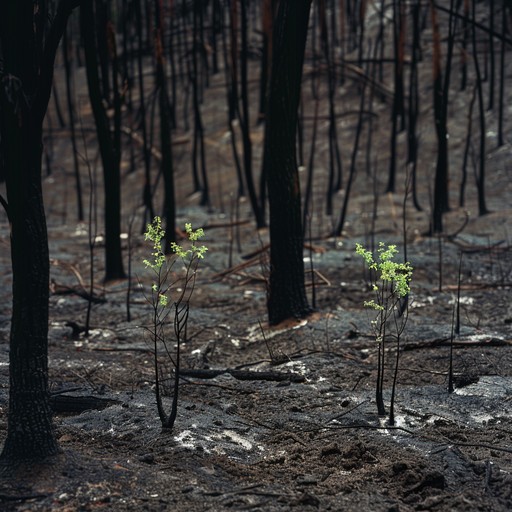
Every fire gets fought. The reasoning is straightforward: fire destroys trees, so stopping fire protects forests.
But forests evolved with fire, not despite it. Periodic burning clears accumulated deadwood, returns nutrients to soil, opens space for fire-adapted species, and keeps the system in the moving equilibrium it needs to stay healthy. These small, regular transformations aren’t disturbances to stability. They are how stability is maintained.
When fire is suppressed, the processes that fire served don’t stop, they accumulate. Deadwood builds. Shade-tolerant species crowd out fire-adapted ones. Dense, stressed stands become vulnerable to beetles and disease. The conditions for catastrophe develop steadily, invisibly, under the surface of what looks like a protected forest.
When fire comes — and it always comes — it no longer moves through the understory. It climbs into the canopy and takes everything. Not because fire became more dangerous, but because the system that had always managed fire was not allowed to.
The system that supported them

The oldest trees in a forest, those with the deepest root networks and widest fungal connections, continuously supply carbon and nutrients to struggling seedlings in deep shade. The seedlings grow. In time they become the trees that share water during future droughts, extend connections to the next generation, and eventually anchor the network the way their predecessors did.
The system that supported them becomes, through them, the system that supports.
The other doors: Brownie’s Home · Stories · Patterns in motion · The framework are angles on one thing. None is a prerequisite for any other.